Hidden in Plain Sight
The Biggest Sleepers in the 2026 NBA Draft

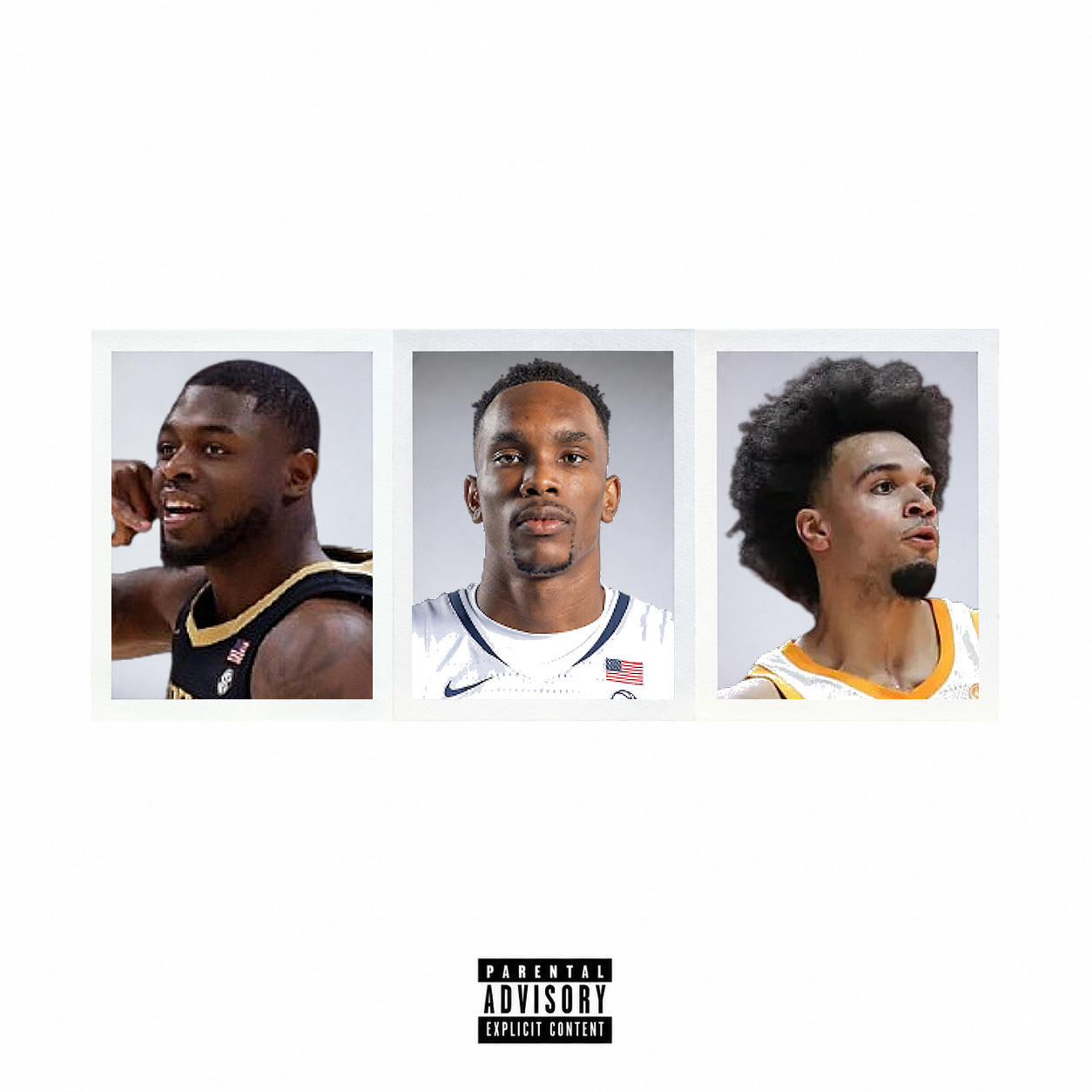
Following the withdrawal deadline on May 27th, there have been many talks about how the 2026 NBA Draft is ‘thinning out’ and that the second round of the draft is supposedly facing a drought of talent. Despite this, there have been a fair amount of players who still are widely projected in the latter end of the draft, prospects who deserve significantly more recognition and hype as legit NBA talents. In this article, I go over five of the biggest sleepers in the 2026 NBA draft.
Let’s do this!
1. Ja’Kobi Gillespie, PG, Tennessee
6’1”, 181.8 lbs, 6’4” wingspan (+3”), 24.0 BMI
Projected in the mid-to-late second round, 22-year-old Ja’Kobi Gillespie is one of my favorite PGs in the draft. The senior guard possesses a mix of scoring, shooting, passing/playmaking, and defensive playmaking invaluable to the small guard archetype.
As a scorer, Gillespie brought value from primarily at the rim and from the perimeter.
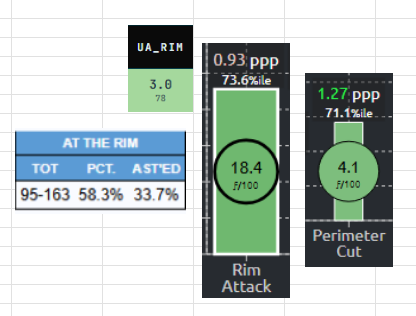
This season, he shot 58% at the rim with 34% of his makes being assisted, while also averaging 3.0 unassisted rim makes per 100 possessions (78th %tile). He produced 0.93ppp on rim attacks (74th %tile efficiency, 46th %tile frequency) while also producing 1.27ppp off perimeter cuts (71st %tile efficiency, 28th %tile frequency), showcasing his value as also an off-ball play finisher.
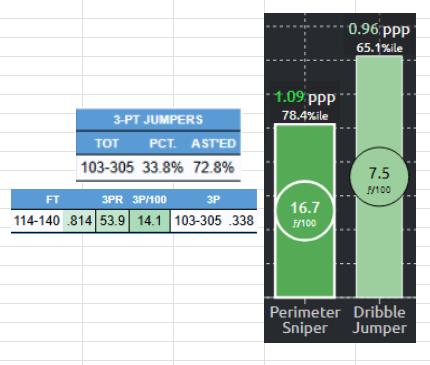
A majority of his scoring production came from the perimeter, shooting 34% from 3 with 73% of his makes being assisted. Although the efficiency may not be the most convincing, his 3PT volume was some of the highest in the nation, with a 53.9 3PR and 14.1 3PT attempts per 100 possessions. His 81 FT% is also indicative of his good touch and helps project that he will be a more efficient shooter in the NBA. He produced 0.96ppp on dribble 3PTs (65th %tile efficiency, 71st %tile frequency), showcasing his talent as an off-the-dribble 3PT shooter. He also produced 1.09ppp as a perimeter sniper (78th %tile efficiency, 51st %tile frequency), again showcasing his value as an off-ball player.
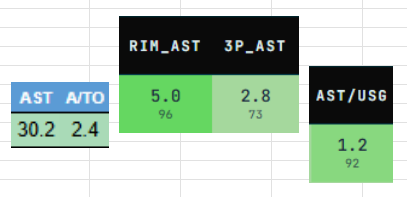
Ja’Kobi Gillespie also brought astounding value as a passer and playmaker. This season, he had a 30.2 AST% along with a 2.4 A:TO. He also averaged 5.0 rim assists (96th %tile) and 2.8 3PT assists (73rd %tile) per 100 possessions. Alongside this, he averaged an AST:USG of 1.2 (92nd %tile), demonstrating how integral playmaking is to his production as an offensive player.
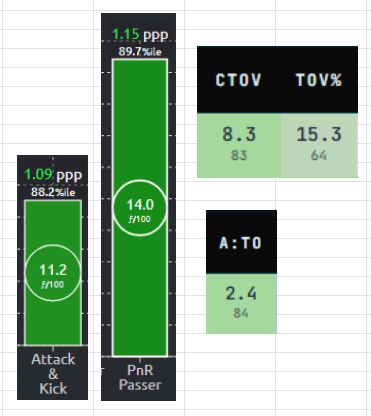
He also produced 1.15ppp as a PnR passer (90th %tile efficiency, 94th %tile frequency), along with 1.09ppp off attack & kicks (88th %tile efficiency, 45th %tile frequency). Gillespie also possesses good turnover economy, with a 15.3 TO% and a 8.3 cTOV% (83rd %tile), along with again his 2.4 A:TO.
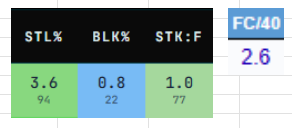
When it comes to guards, especially small guards, most of the time we see major gripes regarding their defense. In the case of Ja’Kobi Gillespie, another one of his biggest strengths is his defensive playmaking, specifically from the perimeter. On the season, Gillespie averaged a 3.6 STL% (94th %tile). He also averaged a 1.0 STOCK:FL (77th %tile) while only averaging 2.6 fouls called per 40 minutes, demonstrating his good stock economy while maintaining foul discipline. Despite the defensive limitations that come with being a 6’1” guard, Gillespie makes the most of his physical/athletic tools and does a good job weaponizing his speed, positional strength, and motor to make plays on the ball and be a disruptor.
As a PG with great production as a two-level scorer, shooter, passer/playmaker, and defensive playmaker, Ja’Kobi Gillespie is a name that deserves to be added to the list of great guard prospects in the 2026 NBA draft.
2. Duke Miles, SG/PG, Vanderbilt
6’2”, 175.2 lbs, 6’5.25” wingspan (+3.25”), 22.49 BMI
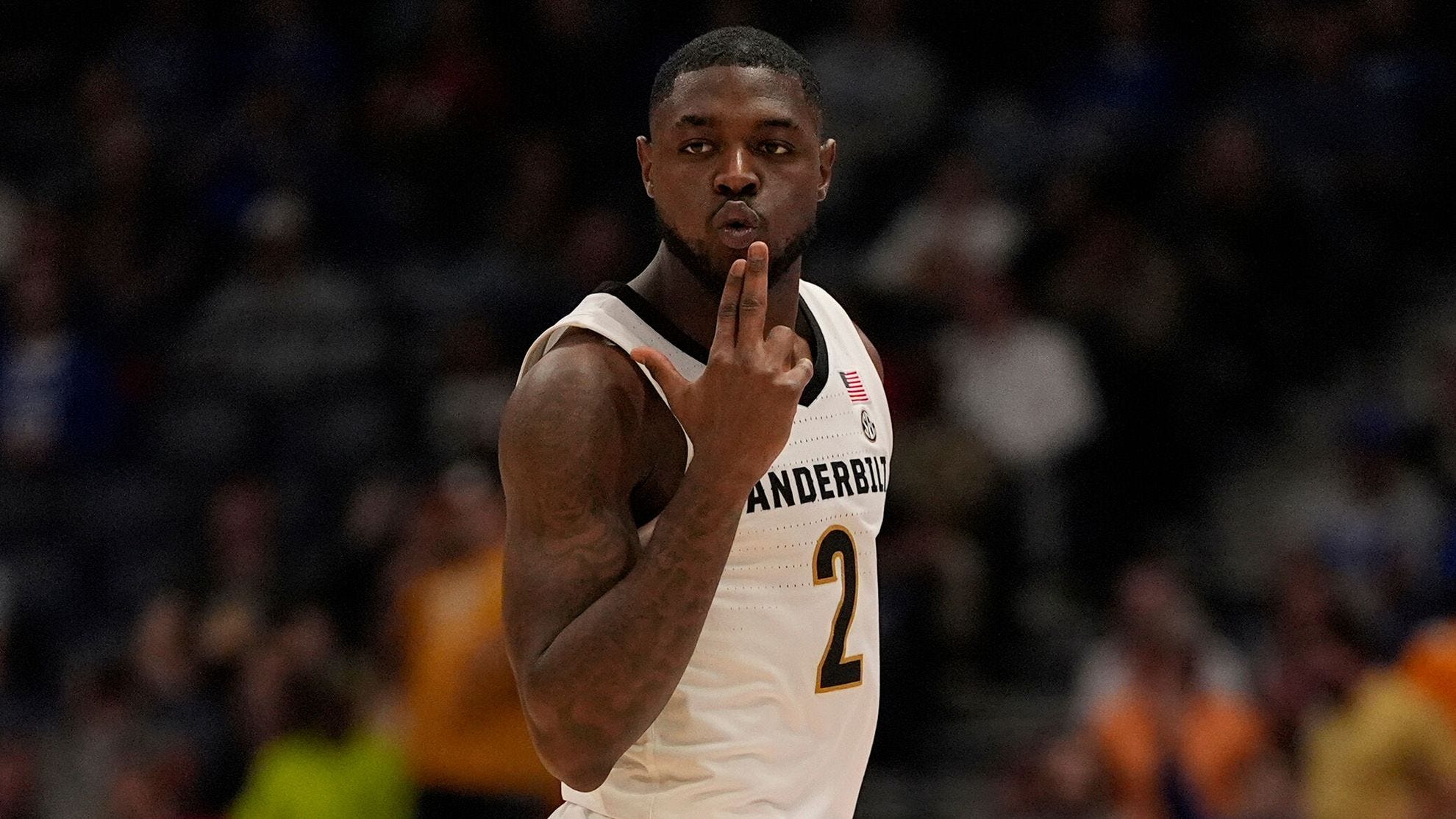
Projected from the late second round to undrafted, 24-year-old Duke Miles is another guard in this class with the tools to overachieve his draft stock. Like Ja’Kobi Gillespie, the senior guard brought great production in scoring, shooting, passing/playmaking, and defensive playmaking as a combo guard.
Duke Miles’ scoring production came from all 3 levels, with a mix of shot creation from the interior, mid-range, and perimeter.
He finished the season with a Rim-2PR of 28.9, and shot 61% at the rim with 15% of his makes being assisted, while also averaging 2.8 unassisted rim makes per 100 possessions (74th %tile). Despite the relatively low rim volume, Miles was one of the most effective drivers in the nation, producing 1.11ppp on rim attacks (97th %tile efficiency, 83rd %tile frequency). Miles also was great at drawing fouls, particularly on drives, finishing the season with a 49.0 FTR.
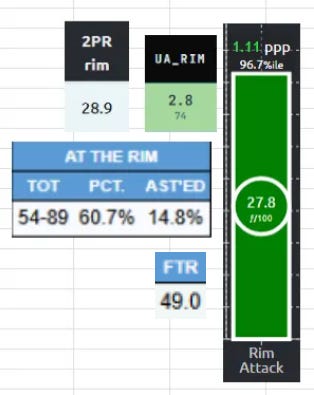
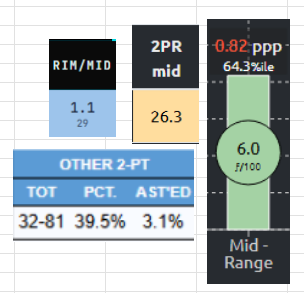
Duke Miles’ inside-the-arc scoring was relatively even between creation at the rim and in the mid-range. He averaged a Rim:Non-Rim of 1.1 and a Mid-2PR of 26.3. He shot 40% in the mid-range with 3% of his makes being assisted, and produced 0.82ppp from this distance (64th %tile efficiency, 42nd %tile frequency).
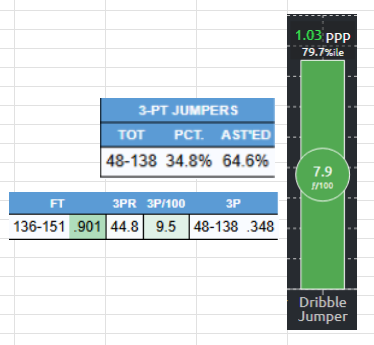
A big portion of his scoring production also came from behind the arc, averaging a 44.8 3PR and 9.5 3PT attempts per 100 possessions. He shot 35% from 3 with 65% of his makes being assisted. He also shot a staggering 90% from the FT line, indicative of his great touch. He produced 1.03ppp on dribble 3PTs (80th %tile efficiency, 75th %tile frequency), showcasing his talent as an off-the-dribble 3PT shooter.
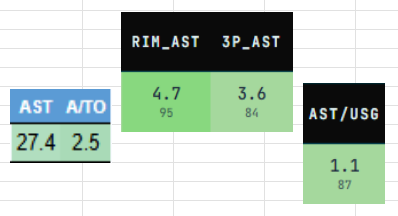
Miles also possesses great passing and playmaking for a combo guard. This season, he had a 27.4 AST% along with a 2.5 A:TO. He also averaged 4.7 rim assists (95th %tile) and 3.6 3PT assists (84th %tile) per 100 possessions. Alongside this, he averaged an AST:USG of 1.1 (87th %tile), symbolizing how prominent of a playmaker he is, despite playing as a combo guard and not being Vanderbilt’s true point.
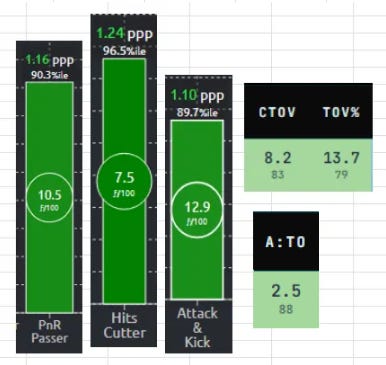
Dukes Miles carries legitimate versatility as a passer, being an uber-efficient playmaker as both a primary and secondary ball handler, having the ability to operate as both an offensive engine and connective passer. He produced 1.16ppp as PnR passer (90th %tile efficiency, 82nd %tile frequency), along with 1.24ppp off hitting cutters (97th %tile efficiency, 76th %tile frequency), and 1.10ppp off attack & kicks (90th %tile efficiency, 57th %tile frequency). Miles also possesses good turnover economy, with a 13.7 TO% and a 8.2 cTOV% (83rd %tile), along with again his 2.5 A:TO.
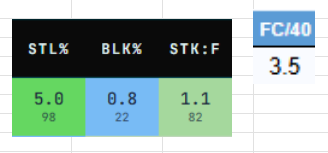
Duke Miles is another rare guard in this class that brings great value as a defensive playmaker at his size and position. Miles was one of the best players in the nation at getting steals, averaging a ridiculous 5.0 STL% (98th %tile). He also averaged a 1.1 STOCK:FL (79th %tile) while averaging 3.5 fouls called per 40 minutes, pairing his historic steal creation with maintained foul discipline. Miles also has great composure under physicality/pressure for a small guard, and pairs it with his foot speed and a great motor to be a pretty disruptive defender, despite the limitations that come with defending on-ball as a 6’2” guard.
As a combo guard with great production as a three-level scorer, shooter, versatile passer/playmaker, and defensive playmaker, Duke Miles is another name that deserves to be added to the list of great guard prospects in the 2026 NBA draft.
3. Ugonna Onyenso, C, Virginia
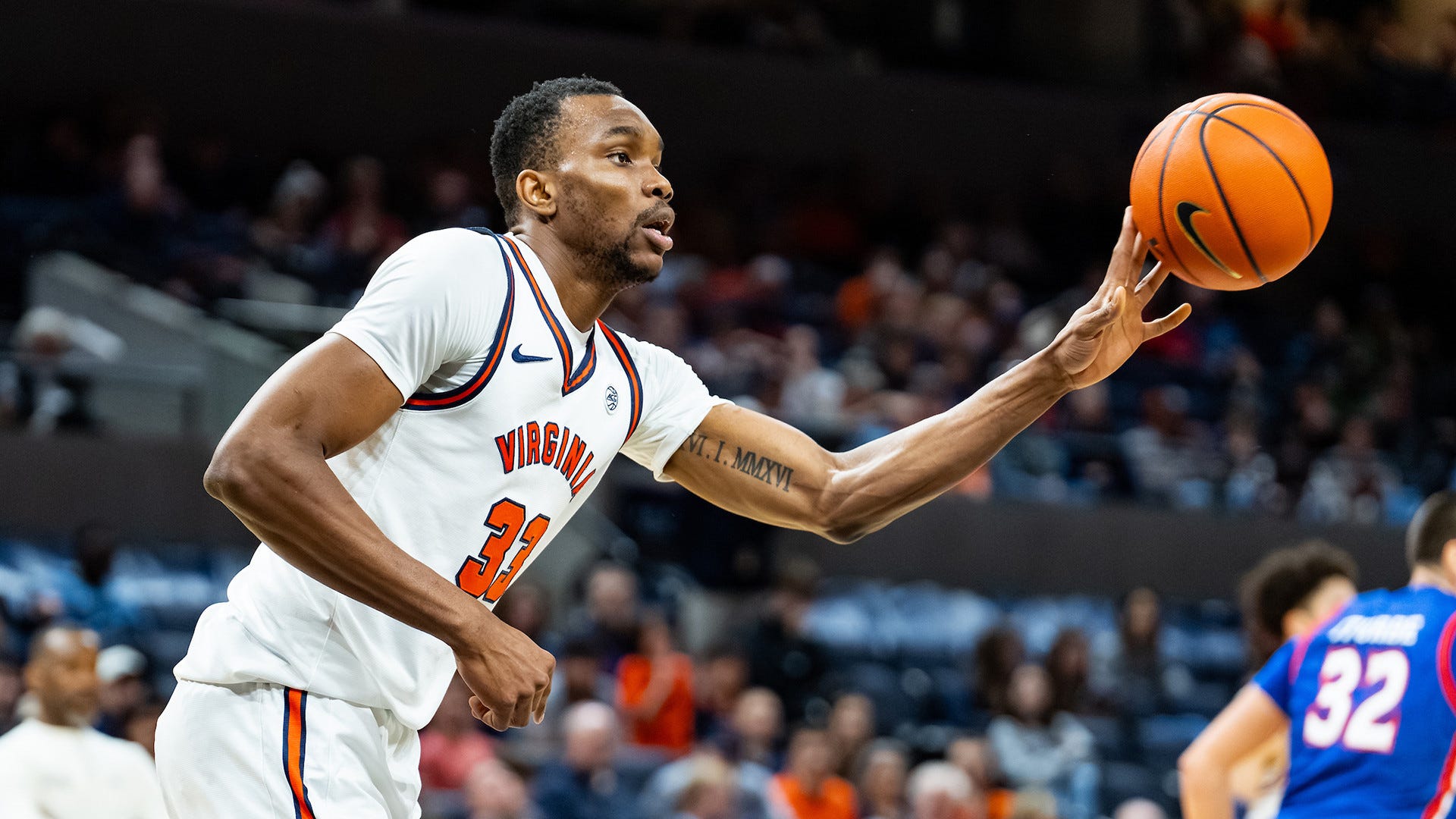
7’0”, 236.8 lbs, 7’4.75” wingspan (+4.75”), 26.67 BMI
Projected in the mid-to-late second round, 21-year-old Ugonna Onyenso has some of the best intangibles for a center in this class. The senior big possesses a mix of defense, rebounding, roll man and lob threat scoring, and shooting touch at the free throw line.
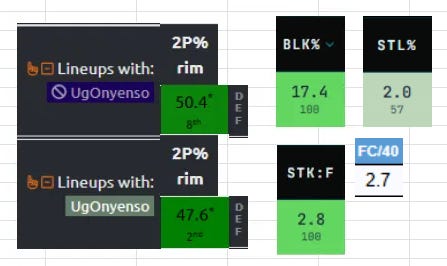
Onyenso is arguably both the best rim protector and shot blocker in this draft. On this season, he averaged an anomalous 17.4 BLK% (100th %tile). In addition to this, he averaged a staggering 2.8 STOCK:FL (100th %tile) and 2.7 fouls called per 40 minutes, demonstrating his historic stock economy while maintaining foul discipline. When Onyenso was on the floor, opposing teams shot 2.8% worse at the rim — more specifically, they only shot 47.6% at the rim with him on the floor. That ranked 2nd in the nation amongst all defensive lineups. Opposing teams also saw a Rim-2PR decrease of 1.4% with him on the floor. These numbers symbolize Ugonna Onyenso’s presence as a rim protector, both suppressing teams’ efficiency and deterring shots at the rim. Onyenso’s 2.0 STL%, although average, is still pretty impressive for a center with his outlandish shot blocking output, and is top 10 amongst all centers in this class.
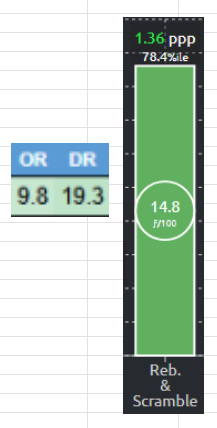
Alongside his rim protection, he also brought good production as both a defensive and offensive rebounder. On the season, he averaged a 19.3 DR% and a 9.8 OR%. Although his defensive rebounding metrics may look a little disappointing at first, when you have a BLK% of 17.3 which is one of the highest in CBB history, you aren’t exactly in the most optimal position to grab defensive rebounds to the best of your abilities, and despite that he was still was a productive defensive rebounder. Onyenso’s presence on the offensive glass was a big part of his scoring output, producing 1.36ppp off rebound & scrambles (78th %tile efficiency, 86th %tile frequency).
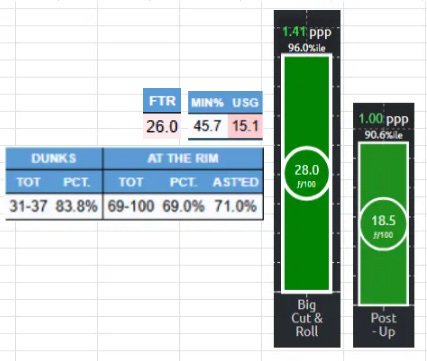
Although not his superpower, Ugonna Onyenso in his limited reps was a great finisher around the rim, shooting 69%, with 71% of his makes being assisted. He also was an effective roll man and lob threat, finishing the season with 37 dunks while only on a 45.7 MIN%, and producing 1.41ppp on cuts & rolls (96th %tile efficiency, 81st %tile frequency). In addition to this, he produced 1.00ppp on post-ups (91st %tile efficiency, 55th %tile frequency). His lack of self-creation, ball handling skill, and foul drawing ability for a big (26.0 FTR), along with his really low usage (15.1 USG%), signifies that his scoring production at the NBA level will likely be quite poor and worse than some of these metrics may indicate, but his time this season at Virginia showed that the tools are there to be an effective big in the pick and roll.
Two more skills that really round out Ugonna Onyenso’s impact as a player are his turnover aversion and touch at the FT line.
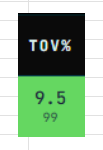
Although he does not bring any production as a passer/playmaker, Onyenso’s 9.5 TO% is still super notable and ranks 1st amongst all centers in this class, and top 5 amongst all bigs.
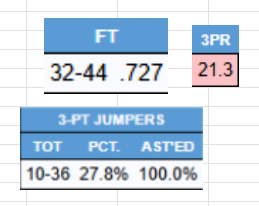
Although still mediocre, he also still has pretty good shooting touch for a center at the FT line (73%). This ranks top 10 amongst all centers in this draft class. Additionally, although I do not think Onyenso will become a legitimate floor spacer at the NBA level, it is quite interesting that he finished the season with a 21.3 3PR, which although is low is pretty high for a center and ranks top 5 amongst all centers in this class. He shot 28% from 3 on the season with 100% of his makes being assisted.
Overall, Onyenso is a big with great size/length at 7'0" with a ~7'5" wingspan, is mobile and not hindered athletically, an elite rim protector, a good defensive and offensive rebounder, a good roll man/lob threat, and not a bad free throw shooter. It is rare that you find a center with all of the above, especially with historic production as a rim protector, and that is what makes Ugonna Onyenso one of the most underrated players in this draft.
4. Bruce Thornton, SG/PG, Ohio St.
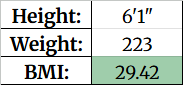
6’1”, 223 lbs, 6’5” wingspan (+4”), 29.42 BMI
Projected in the mid-to-late second round, 22-year-old Bruce Thornton was one of the best guards in college basketball this year. The senior guard possesses a mix of scoring, shooting, passing/playmaking, and has some of the best physicals for a small guard you will see.
Thornton this year put up one of the most efficient scoring and shooting seasons you will ever see out of a guard. He produced as a 3-level scorer, but was more mid-range and perimeter-oriented.
He took the least of his shots at the rim, finishing the season with a Rim-2PR of 23.0. Despite this, he still shot an astonishing 76% at the rim with 18% of his makes being assisted, while also averaging 3.2 unassisted rim makes per 100 possessions (84th %tile). He produced 1.27ppp on rim attacks (99th %tile efficiency, 74th %tile frequency), along with 1.69ppp on perimeter cuts (99th %tile efficiency, 17th %tile frequency). Thornton also was pretty good at drawing fouls, particularly on drives, finishing the season with a 39.7 FTR.
The mid-range is where Thornton relies on the most as a scorer, with a very high Mid-2PR of 40.7. He shot 58% in the mid-range with 18% of his makes being assisted, and also produced 1.13ppp in the mid-range (99th %tile efficiency, 91st %tile frequency).
Thornton was also a pretty high frequency shooter from the perimeter, averaging a 3PR of 36.2 and 7.5 3PA/100. He shot 40% from 3 with 65% of his makes being assisted. His 83 FT% is also indicative of his great touch as a shooter. He produced 1.13ppp on dribble 3PTs (93rd %tile efficiency, 51st %tile frequency), showcasing his talent as an off-the-dribble 3PT shooter. He also produced 1.26ppp as a perimeter sniper (96th %tile efficiency, 35th %tile frequency), showcasing his value as an off-ball scorer.
Thornton also possesses good passing and playmaking for a combo guard. This season, he had a 21.9 AST% along with a 3.0 A:TO. He also averaged 2.9 rim assists (67th %tile) and 3.1 3PT assists (81st %tile) per 100 possessions. Alongside this, he averaged an AST:USG of 0.9 (78th %tile).
He also is a versatile passer, being an efficient playmaker as both a primary and secondary ball handler, having the ability to operate as both an offensive engine and connective passer. He produced 1.13ppp as PnR passer (86th %tile efficiency, 63rd %tile frequency), along with 1.10ppp off attack & kicks (99th %tile efficiency, 56th %tile frequency), and 1.39ppp off hitting cutters (100th %tile efficiency, 18th %tile frequency). Thornton also has truly elite turnover aversion, with a 9.2 TO% and a 5.8 cTOV% (99th %tile), along with again his 3.0 A:TO — symbolizing his top-notch ball security while on a high playmaking load.
Although he does not have good production as a defensive playmaker (1.9 STL%, 0.7 STOCK:FL [42nd %tile]), Bruce Thornton has rare physical traits for a guard, let alone a small guard. At 6’1” and 223 lbs, he has a ridiculous 29.42 BMI, being one of the heaviest and strongest guard prospects we have seen. Although Thornton probably still projects to be a underwhelming defender, he possesses the physical tools to not be a total negative or handicap your team defensively.
As a combo guard who is an uber-efficient three-level scorer, shooter, and passer/playmaker, along with possessing gifted physical tools at his size, Bruce Thornton is a rare small guard prospect whose name is in the list of the most underrated prospects in this draft.
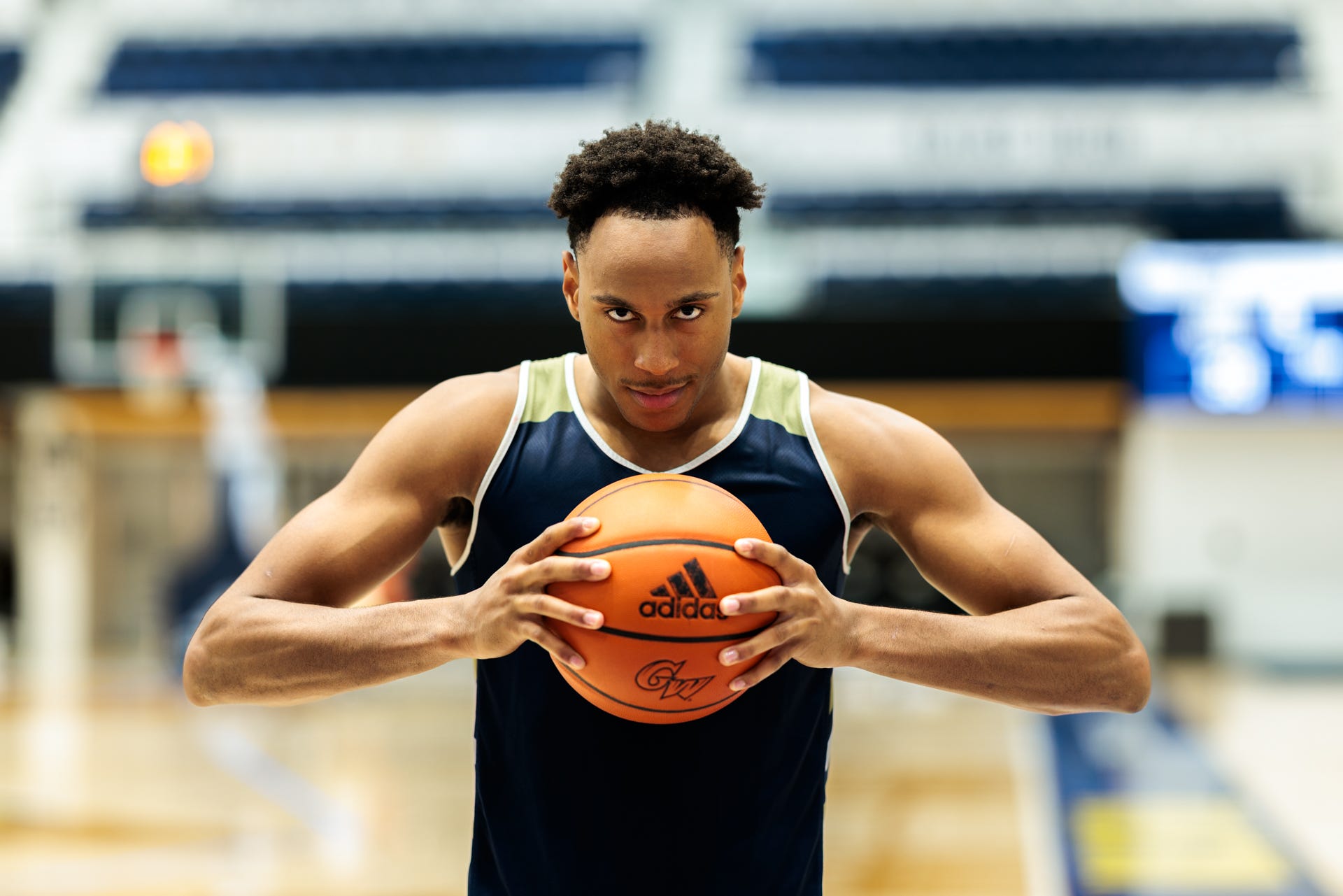
5. Rafael Castro, C, George Washington
6’10”, 220 lbs, 7’4.75” wingspan (+4.75”), 23.59 BMI
Projected in the mid-to-late second round, 23-year-old Rafael Castro is one of the lesser known prospects in this draft. The biggest driving factor behind this is the fact he played for a mid-major program, George Washington (there isn’t even publicly accessible film of the team’s full games). The senior big possesses a mix of good athleticism, versatile defense, great rebounding, and presence as a roll man and lob threat.
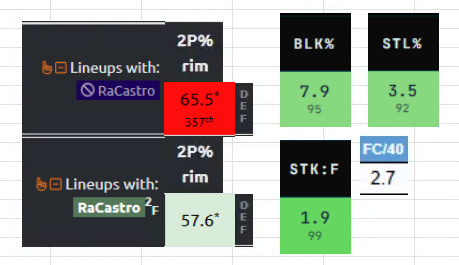
The most intriguing part of Castro’s game is how elite of a defensive playmaker he is for a big — not just at the rim, but also from the perimeter. On this season, he averaged an anomalous 7.9 BLK% (95th %tile). In addition to this, he is great at getting steals, especially for a big, averaging a 3.5 STL% (92nd %tile). He also averaged a 1.9 STOCK:FL (99th %tile) and 2.7 fouls called per 40 minutes, pairing his versatile, great stock creation with good foul discipline. When Castro was on the floor, opposing teams shot 7.9% worse at the rim. Teams still shot 57.6% at the rim with him on the floor, but that is expected from a mid major program, and it is much more important to look at the impact Castro had when on vs. off the floor. Castro’s mix of motor, foot speed, and explosiveness for a big of his size (6’10” with a 7’1.25” wingspan) unlocked his ability to be such a versatile defender and defensive playmaker, and he pairs it with great defensive IQ to make impact and plays off of his great positioning and rotations, especially in passing lanes which is very rare to see in a center.
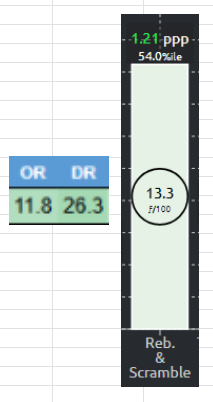
Alongside his rim protection, he also brought great production as both a defensive and offensive rebounder. On the season, he averaged a 26.3 DR% and an 11.8 OR%. His presence on the offensive glass was a big part of his scoring output, producing 1.21ppp off rebound & scrambles (54th %tile efficiency, 82nd %tile frequency).
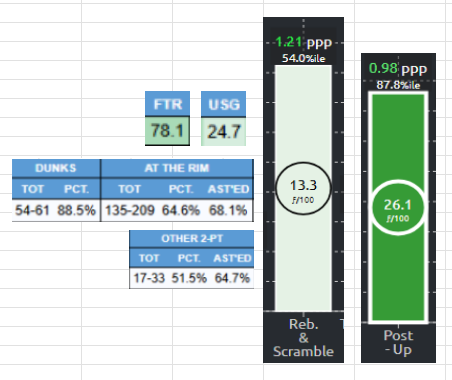
Castro’s context certainly does not do him justice when it comes to maximizing his production as a scorer. Castro was the focal point of George Washington’s offense, averaging a 24.7 USG% — at the NBA level, he will certainly be on low usage and won’t carry a high load. When it comes to his finishing around the rim, he shot 65%, with 68% of his makes being assisted. His athleticism also gives him serious advantages in the PnR, finishing the season with 54 dunks (61 attempts). He produced 1.20ppp on cuts & rolls (62nd %tile efficiency, 83rd %tile frequency). In addition to this, he produced 0.98ppp on post-ups (88th %tile efficiency, 76th %tile frequency). His 52% on non-rim 2PTs also potentially indicates that his touch is better than his efficiency markers suggest. Castro was also elite at drawing fouls, averaging a ridiculous 78.1 FTR. That is not a typo.
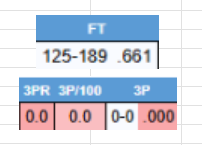
Unsurprising from a big, Castro’s shooting indicators are not good, with a 66 FT% and having not attempted a single 3-pointer all season. You would like to see the efficiency from the FT line go up, but shooting and floor spacing is not something that is necessary from Castro and it will not be detrimental to his offensive process.
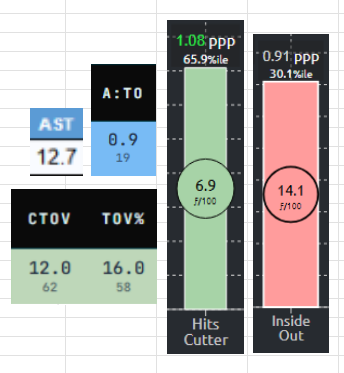
Although still not good, it is quite interesting that Rafael Castro’s playmaking output was above average for a center, averaging a 12.7 AST%. He produced 1.08ppp off hitting cutter (66th %tile efficiency, 71st %tile frequency), along with 0.91ppp off inside-out passes (30th %tile efficiency, 71st %tile frequency). NBA teams will likely never run the ball through Rafael Castro for his playmaking presence to be seen to a legitimate degree, but his flashes of ability to swing the rock as a connective passer are noteworthy. Castro’s turnover aversion was relatively average, with a 16.0 TO% along with a 12.0 cTOV% (62nd %tile). He though averaged an underwhelming 0.9 A:TO. Theoretically, you could expect this number to go down once he enters the league and sees significantly low usage, as opposed to the huge load he shouldered at George Washington.
Overall, a big man coming out of a mid-major program will always be a difficult prospect to evaluate entering league, especially one who was shouldering a load on offense they were not built for. When it comes down to it, Castro’s tools as a good athlete, versatile defender, great rebounder, and presence as a roll man and lob threat solidify his translatability into NBA level basketball and his value as an intriguing big man prospect, making him one of the most underrated players in this draft.
Conclusion:
Despite the reputation this draft has started to build as players started returning to school, there are many prospects in this class that prove that maybe people are just looking in the wrong directions.
Ja’Kobi Gillespie, Duke Miles, Ugonna Onyenso, Bruce Thornton, and Rafael Castro are five of the biggest sleepers in this class, prospects who are symbolic of the hidden talent buried at the bottom of mock drafts. Along with many other prospects, guys like these will get selected in the latter end of the draft and have the chance to become some of the biggest “steals” of this draft class, and the teams who select them will not have gotten lucky — they just will have been smarter than everyone else.